
 See Our Latest Article on HelloNation
What helps keep the spine healthy?
A healthy spine depends on regular movement, supportive daily habits, adequate recovery, and attention to warning signs. Most people do not need an elaborate routine. Consistent choices—such as changing positions often, building strength gradually, and lifting with care—can reduce unnecessary strain and support comfortable movement.
The spine is designed to move, not remain rigid. Sitting, standing, walking, bending, and turning are all normal activities. Problems often arise when one position or repeated movement is maintained for too long without enough variation or conditioning.
How does regular movement protect the back?
Frequent, moderate movement helps maintain joint mobility, circulation, muscle endurance, and coordination. Long periods of sitting can make the hips and back feel stiff, while prolonged standing may fatigue the muscles that help support the spine.
Useful habits include:
- Take brief movement breaks during desk work, driving, reading, or television viewing.
- Walk for a few minutes after extended sitting.
- Change positions before discomfort becomes pronounced.
- Gently move the shoulders, hips, and upper back throughout the day.
- Use stairs, household tasks, or short walks as opportunities for activity when appropriate.
A practical goal is to avoid spending most of the day in one posture. Movement does not need to be intense to be beneficial. Short periods repeated throughout the day can be easier to maintain than a single demanding workout.
What exercises support the spine?
The most useful exercise plan usually combines aerobic activity, strengthening, flexibility, and balance. Walking is a reasonable starting point for many adults because it is accessible and allows pace and distance to be adjusted. Swimming, cycling, and other low-impact activities may also be comfortable for some people.
Strengthening the muscles of the abdomen, hips, back, and legs can improve the body’s ability to handle everyday tasks. Examples may include:
- Glute bridges
- Bodyweight squats to a comfortable depth
- Bird-dog exercises
- Side-lying leg lifts
- Controlled abdominal bracing
- Light resistance exercises
Technique matters more than the number of repetitions. Exercises should be performed slowly enough to maintain control, without holding the breath or forcing a painful range of motion. Anyone with a recent injury, significant weakness, numbness, or a known medical condition should receive individualized guidance before beginning a new exercise program.
Stretching can help with the feeling of tightness, but it is not a substitute for strength and movement. A stretch should feel mild and controlled rather than sharp, electric, or forceful.
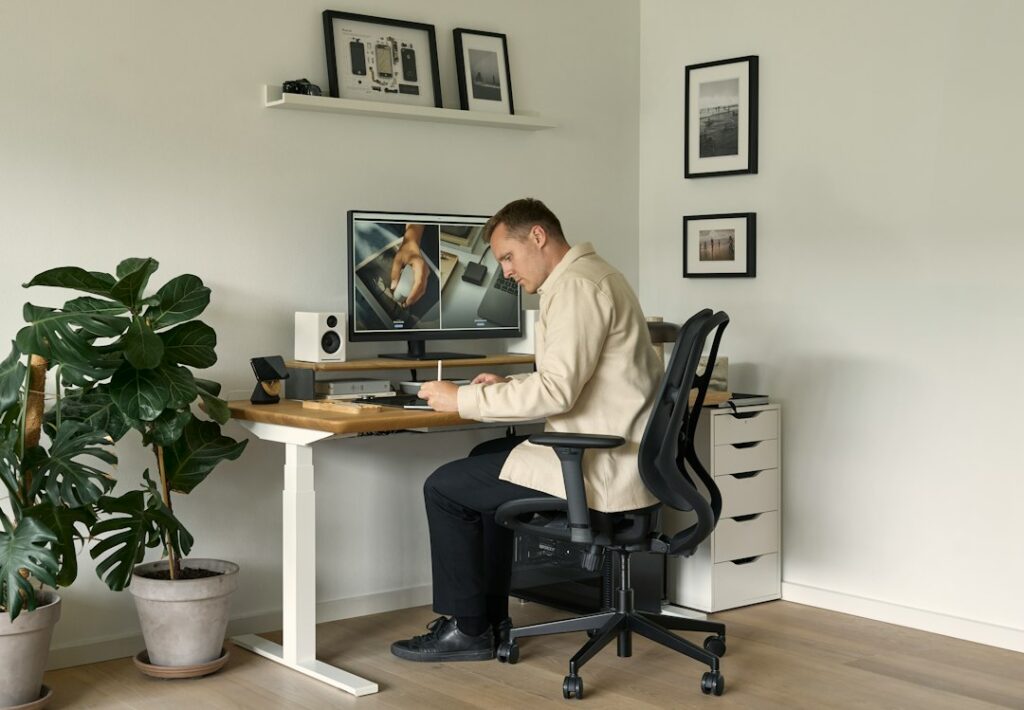
How should people sit and work at home?
Good sitting posture is not a single perfect position. Even a well-aligned posture can become uncomfortable if held for hours. The more useful approach is to create a workspace that allows frequent changes in position.
A supportive setup may include:
- Feet resting on the floor or on a stable footrest
- Knees positioned roughly level with or slightly below the hips
- Shoulders relaxed rather than lifted toward the ears
- A screen near eye level to reduce prolonged neck bending
- Frequently used items placed within easy reach
- A chair that allows the lower back to rest comfortably
During colder months, residents may spend more time indoors, working from home or sitting near screens. Indoor time is a good reason to plan movement breaks rather than waiting for stiffness to appear. A brief walk through the home, gentle mobility exercises, or standing while performing a simple task can interrupt prolonged sitting.
What is the safest way to lift and carry objects?
Safe lifting begins before an object leaves the ground. Assess its weight, shape, handles, and path. If the item is bulky or difficult to control, divide the load or use assistance rather than twisting while carrying it.
For a manageable object:
1. Stand close to it.
2. Place the feet in a stable position.
3. Bend through the hips and knees while keeping the back in a comfortable, neutral position.
4. Hold the object close to the body.
5. Rise using the legs and hips.
6. Turn by moving the feet instead of rotating the trunk under load.
Snow removal, moving storage containers, gardening, and seasonal household projects can place extra demands on the back. Repetitive work is often more tiring than a single lift. Switching tasks, taking breaks, keeping loads light, and using equipment that fits the person’s height can reduce strain.
Can sleep position affect spinal comfort?
Sleep position may influence morning stiffness, although there is no single position that works for everyone. Side sleeping with a pillow between the knees can reduce uncomfortable twisting for some people. A pillow that keeps the neck level with the rest of the spine may also help.
People who sleep on their backs may find support under the knees comfortable. Those who sleep on their stomachs may experience more neck rotation and lower-back strain, but comfort and individual anatomy still matter. The goal is a relaxed position that allows uninterrupted sleep, not a rigid posture maintained all night.

A mattress and pillow do not need to be extremely firm to support the body. Excessive firmness can create pressure points, while excessive softness may make changing positions difficult. Personal comfort, body size, sleep position, and the condition of the mattress all influence the result.
Does body weight affect the spine?
Body weight is only one factor in spinal health, and discomfort should not be reduced to weight alone. However, additional load can increase the mechanical demand on the lower back, hips, and knees. Gradual physical activity, balanced nutrition, adequate sleep, and strength training can support overall function without relying on extreme diets or sudden exercise changes.
Improving fitness may be valuable even when body weight does not change. Better leg strength, endurance, balance, and movement confidence can make ordinary activities easier and may reduce the effects of physical fatigue.
When is back or neck pain a reason to seek medical evaluation?
Many episodes of mild back or neck discomfort improve with relative activity, gentle movement, and time. Staying completely in bed for long periods can increase stiffness and reduce conditioning. However, certain symptoms require prompt medical assessment.
Seek urgent care for back or neck pain accompanied by:
- New loss of bladder or bowel control
- Numbness around the inner thighs or genital area
- Severe or progressive weakness in an arm or leg
- Difficulty walking that is worsening
- Major pain after a significant fall or collision
- Fever, unexplained weight loss, or a history of serious illness
- Pain that is severe, persistent, or rapidly getting worse
Pain that travels down an arm or leg, recurring symptoms, or discomfort that interferes with sleep and daily activities also deserves evaluation. A chiropractor, physician, physical therapist, or other qualified health professional may assess movement, strength, sensation, and contributing factors. The appropriate choice depends on the symptoms and the person’s medical history.
What common spine-care mistakes should be avoided?
Several popular ideas can be misleading. Perfect posture is not a realistic requirement, and occasional discomfort does not always mean the spine is damaged. Likewise, imaging findings such as disc wear may occur in people who have little or no pain.
Other common mistakes include:
- Avoiding all movement because of mild soreness
- Beginning intense exercise without preparation
- Stretching aggressively into sharp pain
- Repeatedly lifting while twisting
- Ignoring weakness, numbness, or changes in coordination
- Assuming a brace can replace strength and movement
- Treating recurring pain with the same strategy without reassessment
Healthy spine care is usually less about finding one corrective position and more about building adaptable movement habits. Regular activity, sensible lifting, supportive sleep, and timely attention to concerning symptoms can help local residents stay active through work, home responsibilities, seasonal chores, and recreation.
